



Quali sono le cause del russamento?
È davvero possibile “curare” il russare? E se si russa, perché è importante conoscerne il motivo?
Perché russiamo?
Alcune persone russano a causa della forma del naso o della mascella; altre a causa della lingua o delle tonsille ingrossate o di grasso in eccesso intorno al collo. Ma esistono anche altri fattori che possono causare il russare (o il russare forte) quali: la stanchezza, il sovrappeso, la gravidanza, dormire in posizione supina e il consumo alcolici prima di andare a dormire.
Quando dormiamo, i muscoli del collo si rilassano. A volte, così tanto che le vie aeree superiori si chiudono parzialmente, restringendo il passaggio attraverso il quale l’aria arriva ai nostri polmoni. Questo restringimento fa vibrare l’aria nella gola durante la respirazione, provocando il russare.
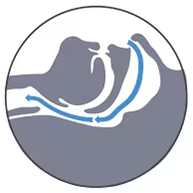
Paziente sano
(vie aeree aperte)
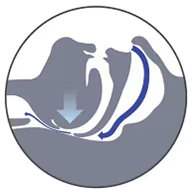
Russatore con OSA
(vie aeree ostruite)
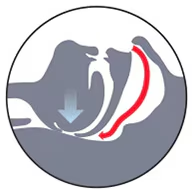
Russatore con OSA
(vie aeree chiuse – apnea)
Il russare può anche essere il segno di un grave disturbo: l'apnea ostruttiva del sonno (OSA).
L’OSA è un disturbo respiratorio del sonno caratterizzato da pause respiratorie chiamate apnee. Queste durano da 10 a 30 secondi e possono verificarsi più di 30 volte all’ora. Le apnee causano frequenti micro risvegli che disturbano il sonno e influenzano la qualità della vita e della salute. L’OSA colpisce circa il 3-17% della popolazione maschile, ma oltre l’80% dei pazienti non viene diagnosticato6.
Per saperne di più
Esame e diagnosi dell'apnea del sonno
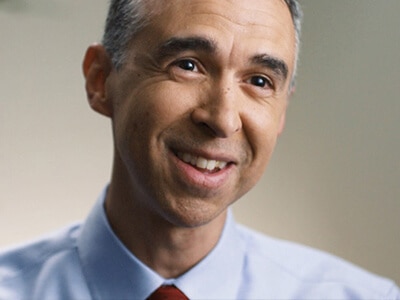
“Con un approccio diagnostico e terapeutico adeguato, è possibile trattare la maggior parte dei disturbi del sonno” afferma il dottor Wesley E. Fleming dello Sleep Center Orange County.
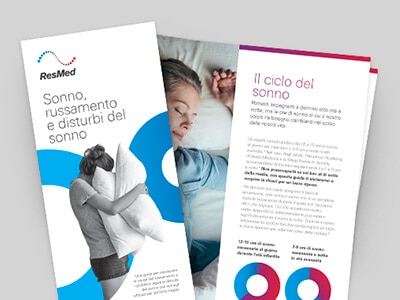
Sonno, russamento e disturbi del sonno
Dormi abbastanza e hai un sonno di buona qualità? Questa guida esplora i più comuni disturbi del sonno e come risolverli.
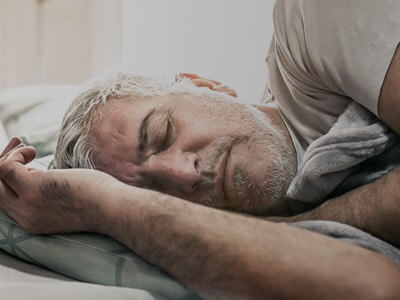
Cos'è l'apnea del sonno?
L’apnea del sonno è più diffusa di quanto si possa pensare, ne soffrono, infatti, più di 3 uomini su 10 e quasi 1 donna su 5, in molti casi senza esserne consapevoli7.
Bibliografia:
- Ohayon, M.M., et al., Snoring and breathing pauses during sleep: telephone interview survey of a United Kingdom population sample. BMJ, 1997. 314(7084): p. 860-3.
- A+A Healthcare study undertaken with 95 patients who wore Narval CC (Equinox in France) in 2011.
- Hu, F.B., et al., Prospective study of snoring and risk of hypertension in women. Am J Epidemiol, 1999. 150(8): p. 806-16.
- Lechner, M., et al., Snoring and breathing pauses during sleep: interview survey of a United Kingdom population sample reveals a significant increase in the rates of sleep apnoea and obesity over the last 20 years – data from the UK sleep survey. Sleep Med, 2019. 54: p. 250-256. You can say that 1 in 5 snorers (men or women) could suffer from sleep apnea.
- Vecchierini MF & al. A custom-made mandibular repositioning device for obstructive sleep apnoea-hypopnoea syndrome: the ORCADES study. Sleep Med. 2016 Mar;19:131-40. doi: 10.1016.
- Young T, Evans L, Finn L, Patta M. Estimation of the clinically diagnosed proportion of sleep apnoea syndrome in middle-aged men and women. Sleep 1997; 20: 705-706.
- Sleep-disordered breathing affects 34% of men and 17% of women aged between 30-70 Peppard et al. Increased Prevalence of Sleep-Disordered Breathing in Adults. Am J Epidemiol. 2013 (5.17).